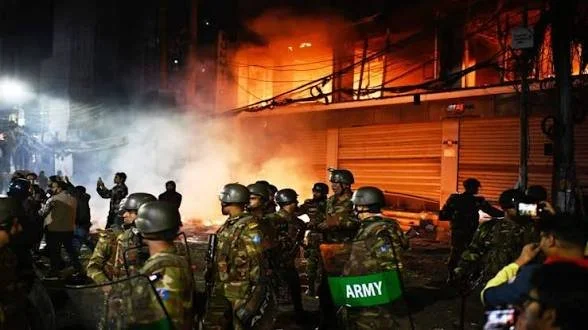
What’s Happening to Hindus in Bangladesh Is Not Being Taken Seriously Enough
Over the past several weeks, I’ve been following reports coming out of Bangladesh that are deeply disturbing — not because violence is new, but because of how consistent, targeted, and quietly ignored it has been.
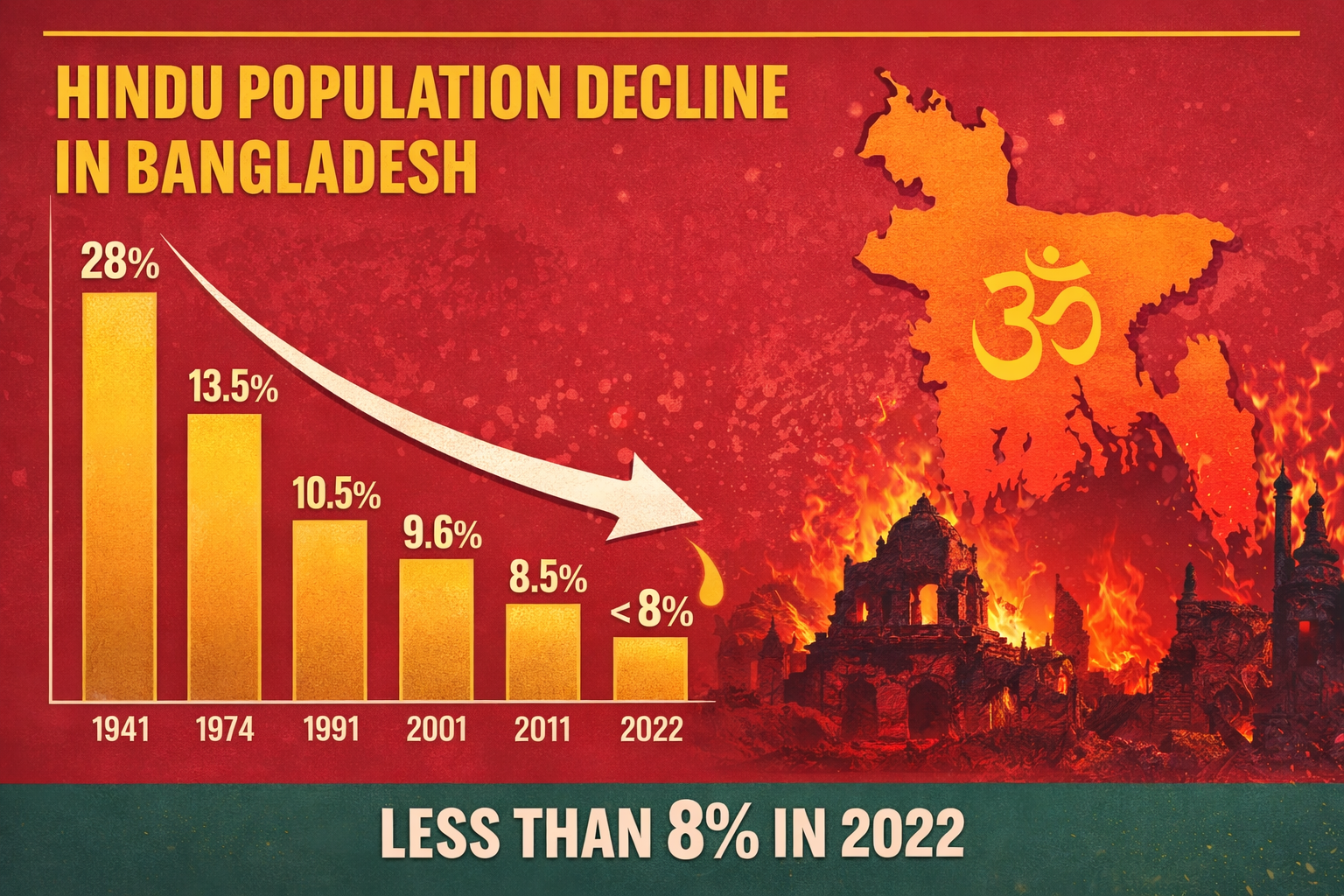
Hindus in Bangladesh are being killed.
Others are being assaulted.
Families are being terrorized.
And yet, these stories rarely stay in the public eye for more than a moment.
This is not about sensationalism.
This is about paying attention.
This Is Not One Incident. It’s a Pattern.
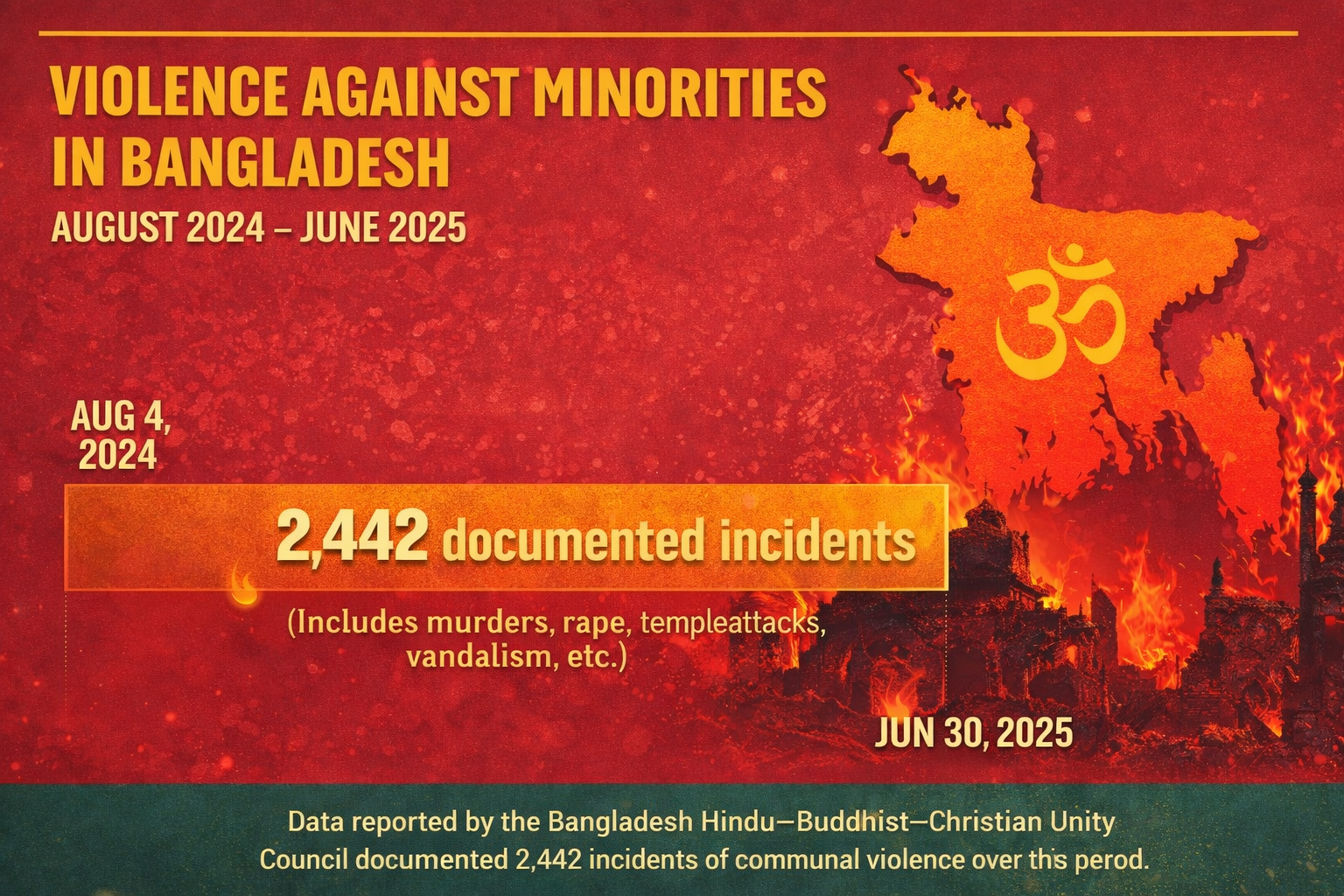
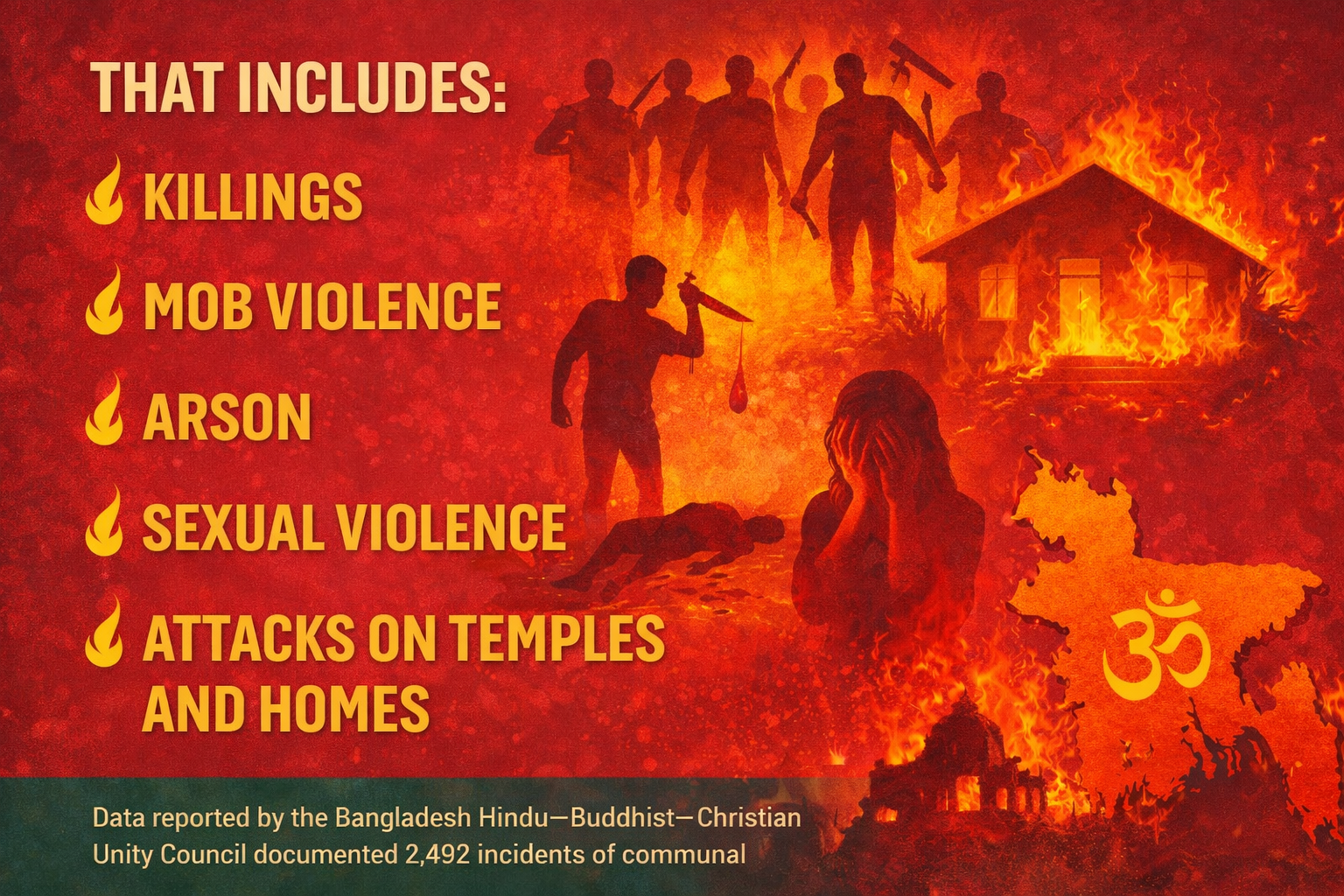
Human rights organizations have documented a sharp rise in violence against minority communities across Bangladesh. According to reporting by NDTV, at least 51 incidents of communal violence against minorities were recorded in December alone, including lynchings, shootings, arson, and mob attacks.
What’s alarming isn’t just the violence itself — it’s the frequency, the similar methods, and the growing fear within minority communities as Bangladesh approaches another election cycle.
The People Behind the Headlines
These were not abstract “cases.”
They were people — with families, livelihoods, and futures.
Dipu Chandra Das was lynched and burned alive on December 18, 2025, in Mymensingh following allegations of blasphemy. His killing sparked international concern and condemnation.
Amrit Mondal was beaten to death around December 24 in Rajbari district amid mob violence.
On December 29, Bajendra Biswas was shot dead in Mymensingh — another killing reported amid rising attacks on minorities.
Prantos Sarkar and Utpal Sarkar were also reported killed during this same wave of violence targeting Hindu community members.
On January 5, 2026, Rana Pratap Bairagi, a Hindu businessman and journalist, was shot dead — raising further alarm about targeted killings.
Around the same time, Moni Chakraborty, a grocery shop owner in Narsingdi district, was hacked to death. He leaves behind a 12-year-old son.
On January 3, Khokon Chandra Das died after being attacked, stabbed, and set on fire. Reports indicate he tried to escape the attackers and later succumbed to his injuries.
These deaths did not happen in isolation.
They form a clear and disturbing pattern.
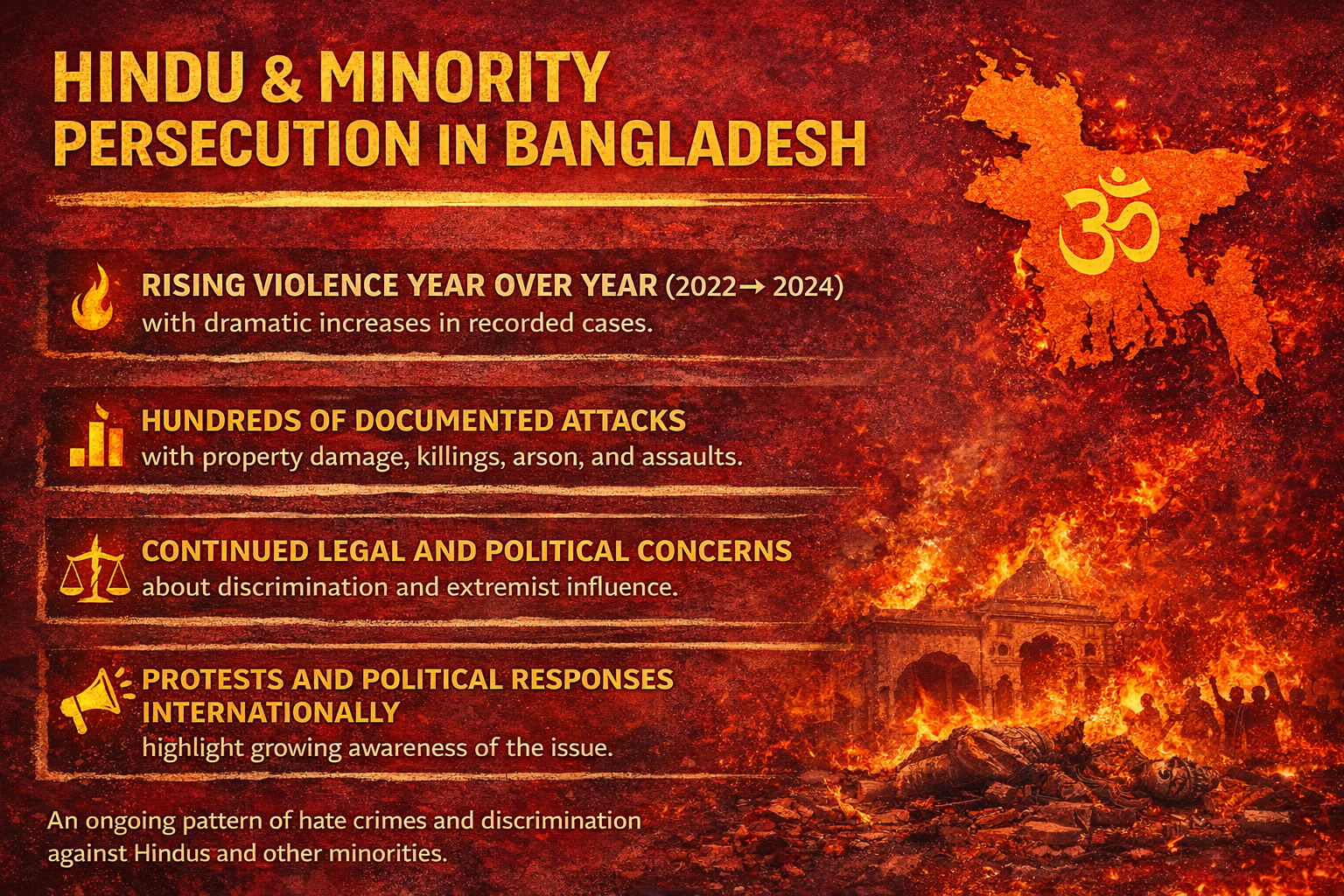
It’s Not Just Killings
The violence has not been limited to murder.
In Jhenaidah, a 40-year-old Hindu widow was reportedly gang-raped, tied to a tree, had her hair cut, and was tortured. Arrests have been made, but the brutality of the act itself speaks volumes about the climate of fear minorities are living under.
There have also been reports of Hindu men dying while fleeing mobs. In one case, a man reportedly jumped into water while trying to escape a crowd chasing him.
When people are dying not only from attacks, but from trying to survive them, something is deeply wrong.
Silence Has Consequences
India’s Ministry of External Affairs has criticized Bangladesh’s handling of these incidents, calling attention to a recurring pattern of attacks against minorities and urging accountability.
Members of the UK Parliament and other international voices have also expressed concern, urging stronger action and diplomatic engagement.
Still, for many victims and families, justice feels distant.
Why This Matters
These individuals were not statistics.
They were fathers, sons, neighbors, and community members.
When violence against any group is ignored, minimized, or selectively acknowledged, it sets a dangerous precedent.
Human rights are not conditional.
Protection should not depend on religion.
And silence is not neutrality — it has consequences.
Closing
May the victims be remembered.
May the perpetrators be held accountable.
And may the world choose to look — not away.