
Welcome to: The Ātmasphere
A space to breathe, reflect, and reconnect.
What’s Happening to Hindus in Bangladesh Is Not Being Taken Seriously Enough
The Humanitarian crisis in Bangladesh: Why the world is staying silent about the treatment of Hindus in Bangladesh
Over the past several weeks, I’ve been following reports coming out of Bangladesh that are deeply disturbing — not because violence is new, but because of how consistent, targeted, and quietly ignored it has been.
Hindus in Bangladesh are being killed.
Others are being assaulted.
Families are being terrorized.
And yet, these stories rarely stay in the public eye for more than a moment.
This is not about sensationalism.
This is about paying attention.
This Is Not One Incident. It’s a Pattern.
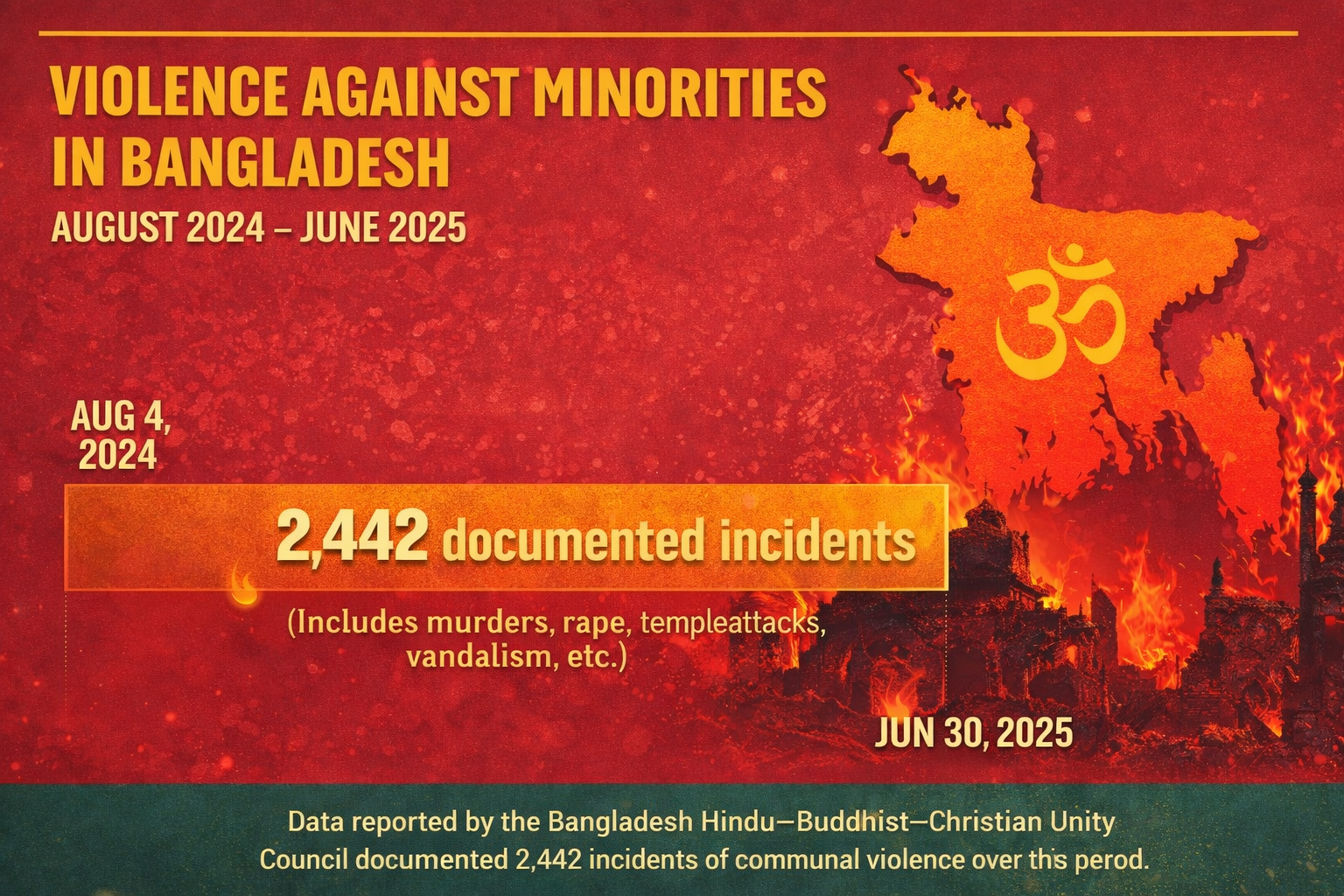
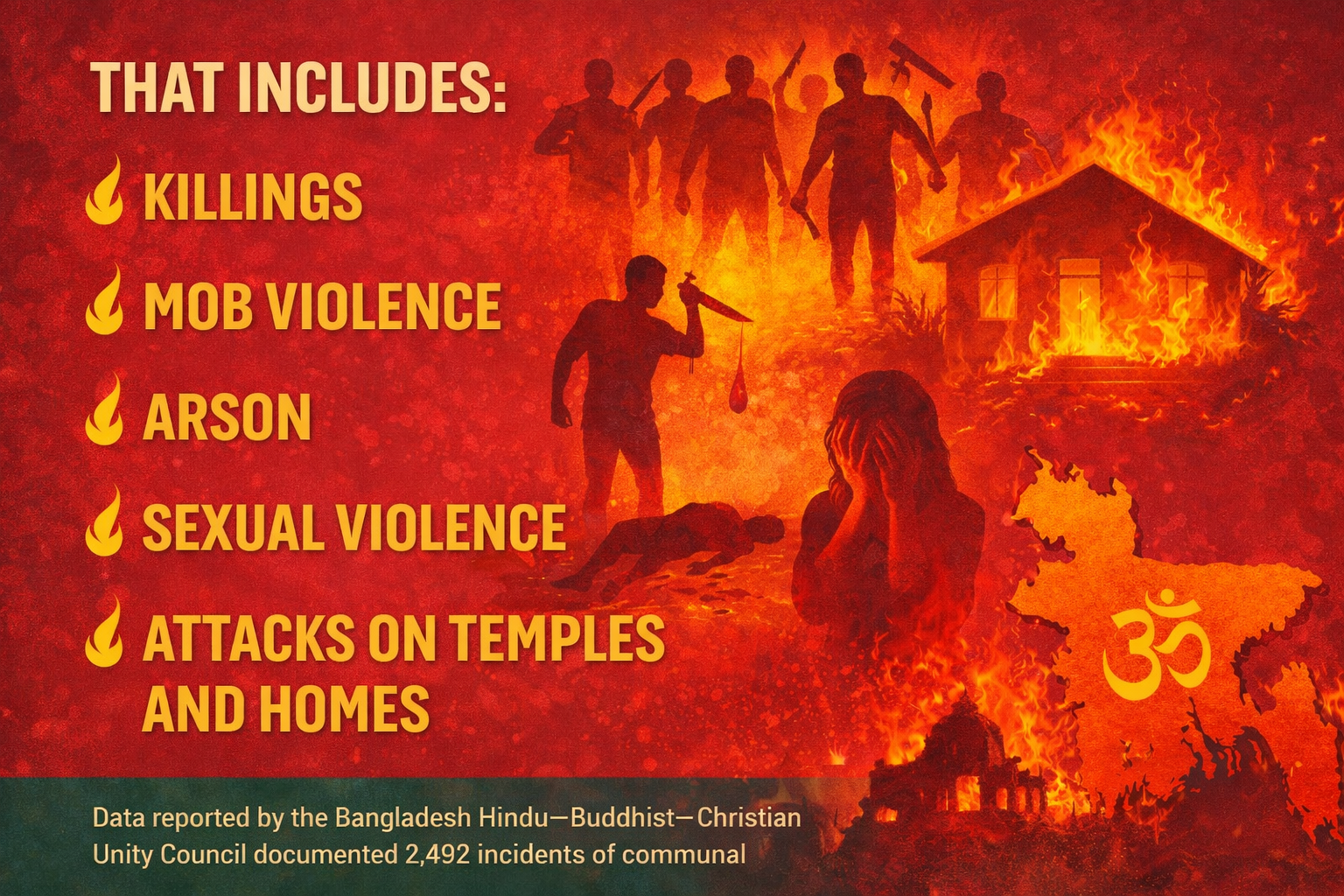
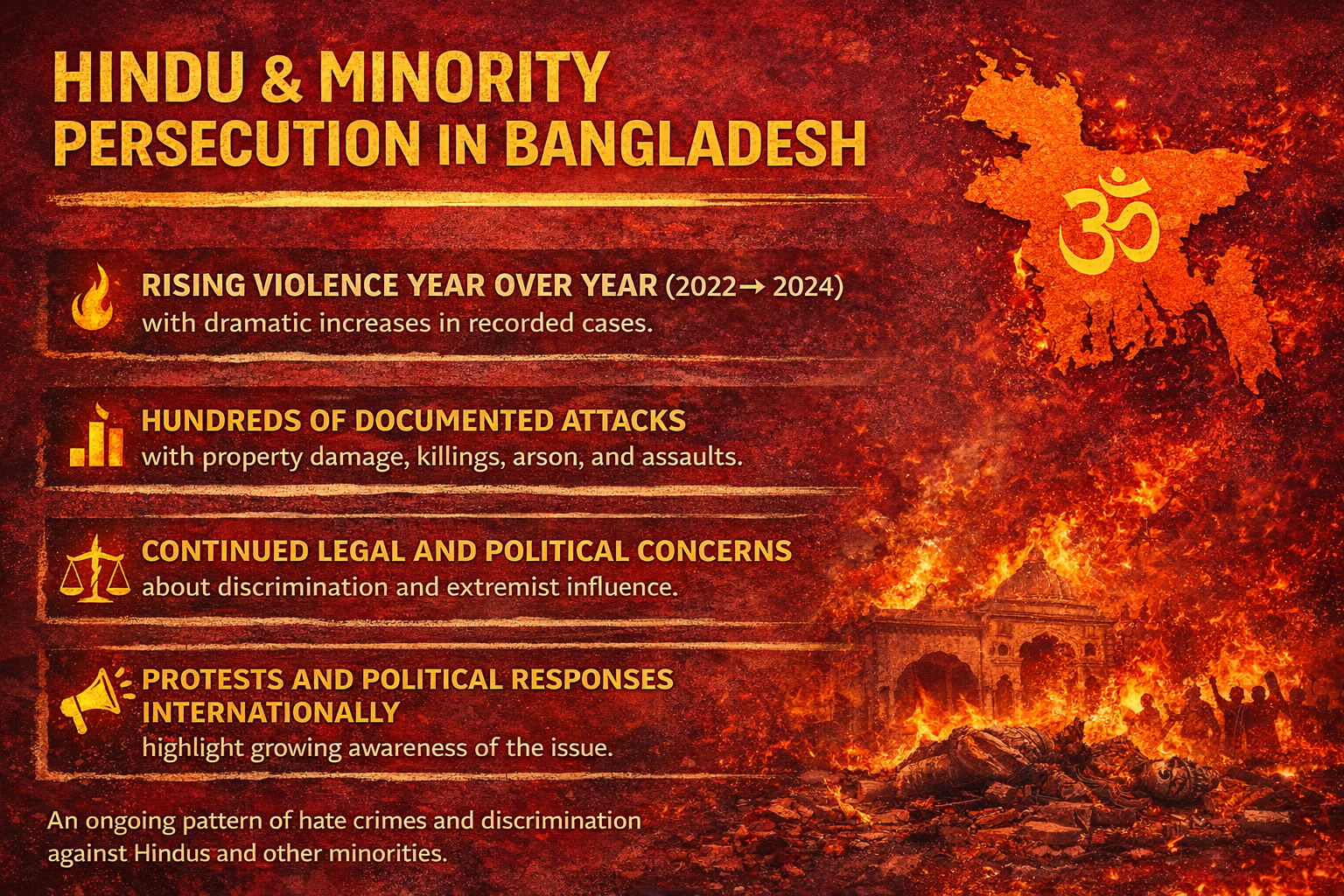
Human rights organizations have documented a sharp rise in violence against minority communities across Bangladesh. According to reporting by NDTV, at least 51 incidents of communal violence against minorities were recorded in December alone, including lynchings, shootings, arson, and mob attacks.
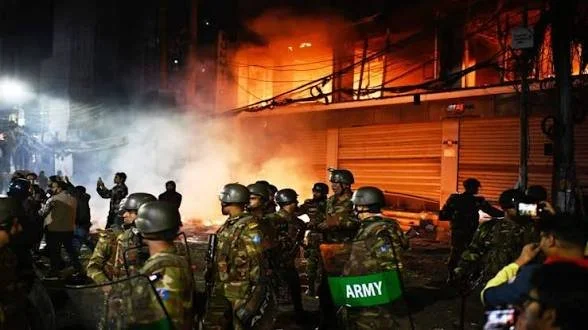
What’s alarming isn’t just the violence itself — it’s the frequency, the similar methods, and the growing fear within minority communities as Bangladesh approaches another election cycle.
The People Behind the Headlines
These were not abstract “cases.”
They were people — with families, livelihoods, and futures.
Dipu Chandra Das was lynched and burned alive on December 18, 2025, in Mymensingh following allegations of blasphemy. His killing sparked international concern and condemnation.
Amrit Mondal was beaten to death around December 24 in Rajbari district amid mob violence.
On December 29, Bajendra Biswas was shot dead in Mymensingh — another killing reported amid rising attacks on minorities.
Prantos Sarkar and Utpal Sarkar were also reported killed during this same wave of violence targeting Hindu community members.
On January 5, 2026, Rana Pratap Bairagi, a Hindu businessman and journalist, was shot dead — raising further alarm about targeted killings.
Around the same time, Moni Chakraborty, a grocery shop owner in Narsingdi district, was hacked to death. He leaves behind a 12-year-old son.
On January 3, Khokon Chandra Das died after being attacked, stabbed, and set on fire. Reports indicate he tried to escape the attackers and later succumbed to his injuries.
These deaths did not happen in isolation.
They form a clear and disturbing pattern.
It’s Not Just Killings
The violence has not been limited to murder.
In Jhenaidah, a 40-year-old Hindu widow was reportedly gang-raped, tied to a tree, had her hair cut, and was tortured. Arrests have been made, but the brutality of the act itself speaks volumes about the climate of fear minorities are living under.
There have also been reports of Hindu men dying while fleeing mobs. In one case, a man reportedly jumped into water while trying to escape a crowd chasing him.
When people are dying not only from attacks, but from trying to survive them, something is deeply wrong.
Silence Has Consequences
India’s Ministry of External Affairs has criticized Bangladesh’s handling of these incidents, calling attention to a recurring pattern of attacks against minorities and urging accountability.
Members of the UK Parliament and other international voices have also expressed concern, urging stronger action and diplomatic engagement.
Still, for many victims and families, justice feels distant.
Why This Matters
These individuals were not statistics.
They were fathers, sons, neighbors, and community members.
When violence against any group is ignored, minimized, or selectively acknowledged, it sets a dangerous precedent.
Human rights are not conditional.
Protection should not depend on religion.
And silence is not neutrality — it has consequences.
Closing
May the victims be remembered.
May the perpetrators be held accountable.
And may the world choose to look — not away.
Watch the Youtube video I did on this here: https://youtu.be/c4gOYVKkpHA?si=G-m447b-08kXFOEu

🕉️ How Dharma Can Support Mental Wellness
Blog 1 - How Dharma Can Support Mental Health & Wellness
Mental wellness isn’t just about feeling happy — it’s about finding balance, meaning, and peace even in the midst of life’s challenges. Dharma gives us a way to do that.
Let’s work through this together.
🌿 What Is Dharma Really About?
Dharma (धर्म) isn’t a religion or a set of rituals. It’s the law of harmony that holds life together — the rhythm between our thoughts, actions, and the world around us.
When that rhythm breaks, the mind feels scattered. When it flows, we feel grounded and whole.
Dharma reminds us that mental health is not only about the mind — it’s about how we live, speak, eat, breathe, and serve.

October 10th is World Mental Health Day
Mental wellness isn’t just about feeling happy — it’s about finding balance, meaning, and peace even in the midst of life’s challenges. Dharma gives us a way to do that.
Let’s work through this together.
🌿 What Is Dharma Really About?
Dharma (धर्म) isn’t a religion or a set of rituals. It’s the law of harmony that holds life together — the rhythm between our thoughts, actions, and the world around us.
When that rhythm breaks, the mind feels scattered. When it flows, we feel grounded and whole.
Dharma reminds us that mental health is not only about the mind — it’s about how we live, speak, eat, breathe, and serve.
Don’t worry about sounding professional. Sound like you. There are over 1.5 billion websites out there, but your story is what’s going to separate this one from the rest. If you read the words back and don’t hear your own voice in your head, that’s a good sign you still have more work to do.
Be clear, be confident and don’t overthink it. The beauty of your story is that it’s going to continue to evolve and your site can evolve with it. Your goal should be to make it feel right for right now. Later will take care of itself. It always does.
🧠 The Dharmic View of the Mind
In Vedic thought, the mind (manas), intellect (buddhi), and self (ātman) are not separate parts — they are reflections of one inner light.
When that light gets clouded by stress, pain, or confusion, Dharma offers practices to gently clear the fog.
Our goal is not to silence the mind but to train it to serve truth, not fear.
That’s why prayer, meditation, and reflection are not escapes — they are realignment.
““Asato mā sad gamaya, tamaso mā jyotir gamaya.”
Lead me from untruth to truth, from darkness to light.”
🪷 How Living Dharmically Supports Mental Wellness
Each pillar of Dharma nourishes a different part of mental health:
Ahimsā (Non-harm): Speak to yourself the way you would to someone you love. Self-compassion is the first form of non-violence.
Satya (Truth): Don’t hide your emotions behind “I’m fine.” Healing begins with honesty.
Santosha (Contentment): Gratitude transforms anxiety into acceptance.
Tapas (Discipline): Simple habits — rising early, walking, or journaling — help regulate the nervous system.
Sevā (Service): Helping others breaks the illusion that we are alone in our suffering.
Svādhyāya (Self-study): Studying scripture or reflecting on your day builds awareness, not guilt.
These aren’t abstract ideals — they’re daily practices that restore the balance between body, mind, and soul.
🔥 When Practice Becomes Healing
Dharma gives us ways to transform emotion into energy and energy into awareness:
Mantra and Breath: The repetition of Om Shāntiḥ or So’ham regulates breathing and brings calm.
Yajña (Sacred Offering): In offering to Agni, we symbolically burn inner impurities — anger, jealousy, regret — and invite clarity.
Satsang: Being around others walking the same path reminds us we’re not alone in our journey.
Meditation (Dhyāna): Quiet reflection reconnects us with the witness within — the Ātman, which remains unshaken by storms.

The goal is not to escape the storm, but to realize that we are the sky that holds it.
⚖️ Dharma and Modern Healing
Dharma and therapy are not opposites — they are allies.
Where modern therapy offers clinical support, Dharma offers spiritual grounding.
One heals the mind. The other strengthens the soul.
And both are necessary.
Seeking help is not weakness — it is Svadharma, your sacred duty to care for the self that God has placed in your keeping.
💬 A Closing Reflection
When life feels heavy, remember:
Your worth is not measured by your productivity or your positivity.
It’s measured by your willingness to keep showing up — with compassion, with awareness, and with courage.
Because that too… is Dharma.
I pray that love and light guide your path.
Namaste!
~Pt. Neall
🪔 Disclaimer
This article shares Dharmic perspectives intended for spiritual and community support.
It is not a substitute for professional therapy or medical care.
If you or someone you know is in distress, please reach out to a licensed mental-health professional or a trusted helpline in your area.